
2025 Climate Action in Review: Reflections from Apala Group’s Work Across APAC, Latin America, and the Caribbean

As 2025 comes to a close, we’ve been taking a step back to reflect on the stories, signals, and shifts we shared this year across the Asia Pacific (APAC), Latin America (LATAM), and the Caribbean.
What stands out most isn’t just the pace of change, but how clearly climate action is moving from ambition into implementation.
Across APAC, during the year we observed the expansion of renewable energy sources and the development of carbon markets in real time, which led to the development and publication of different studies to meet the needs and interests of our partners and clients in the region.
In Indonesia, nearly 1.6 million tCO₂e have already been traded through the IDXCarbon platform since its launch, with plans to double volumes by the end of 2025. This momentum is unfolding alongside the country’s 42 GW renewable energy expansion under its 10-year power plan — a reminder that carbon markets and energy policy are increasingly moving in parallel.
In the Philippines, 2024 marked a turning point. A record 794 MW of new renewable capacity was energized in a single year, surpassing the previous three years combined. Policy tools like EVOSS and strengthened Renewable Portfolio Standards have clearly lowered barriers to deployment. At the same time, the country is preparing to launch a national Voluntary Carbon Market by 2026, with legislation already paving the way for emissions trading and low-carbon investment.
Vietnam also took a decisive step forward, issuing its roadmap for a national Emissions Trading System. A pilot was officially launched in the summer, with a full market expected by 2029, bringing heavy-emitting sectors into the transition.
Meanwhile, Taiwan’s evolving electricity market continues to shape how corporate buyers navigate renewable procurement in high-cost environments.
In addition to these market developments, we reflect on the active presence of the Apala Group's APAC team in various forums and events, which allowed them not only to further position the team locally, but also to gain firsthand insight into the region’s sustainable development landscape.

In Latin America, 2025 made one thing unmistakable: climate policy, resilience, and justice are deeply intertwined.
Mexico presented its NDC 3.0 at COP30, introducing absolute economy-wide emissions targets, strengthened adaptation pillars, an explicit focus on loss and damage, and a just transition framework centered on human rights and intergenerational equity.
At the same time, extreme weather across the region from record heat and floods to wildfires and glacier loss underscored the urgency of turning commitments into action. This reality sits alongside real progress: nearly 69% of the region’s electricity now comes from renewable sources, positioning Latin America as a global leader in clean power.
In this context, the event "México por el Clima: Semana de Acción 2025" was held in the country for the first time, serving as a prelude to Mexico's presentation at COP30, as well as a platform to foster dialogue and create synergies toward a just, resilient, and sustainable transition. Apala Group had the privilege of hosting and participating in different side events, with strategic partners such as HSBC and HP Inc., and featuring distinguished panelists representing diverse organizations, institutions, and corporations, including CHEP, Fibra UNO (FUNO), GFLAC (Climate Finance Group for Latin America and the Caribbean), Anahuac University, Tecnológico de Monterrey, KfW, Kilimo, Siemens AG, and WRI Mexico.
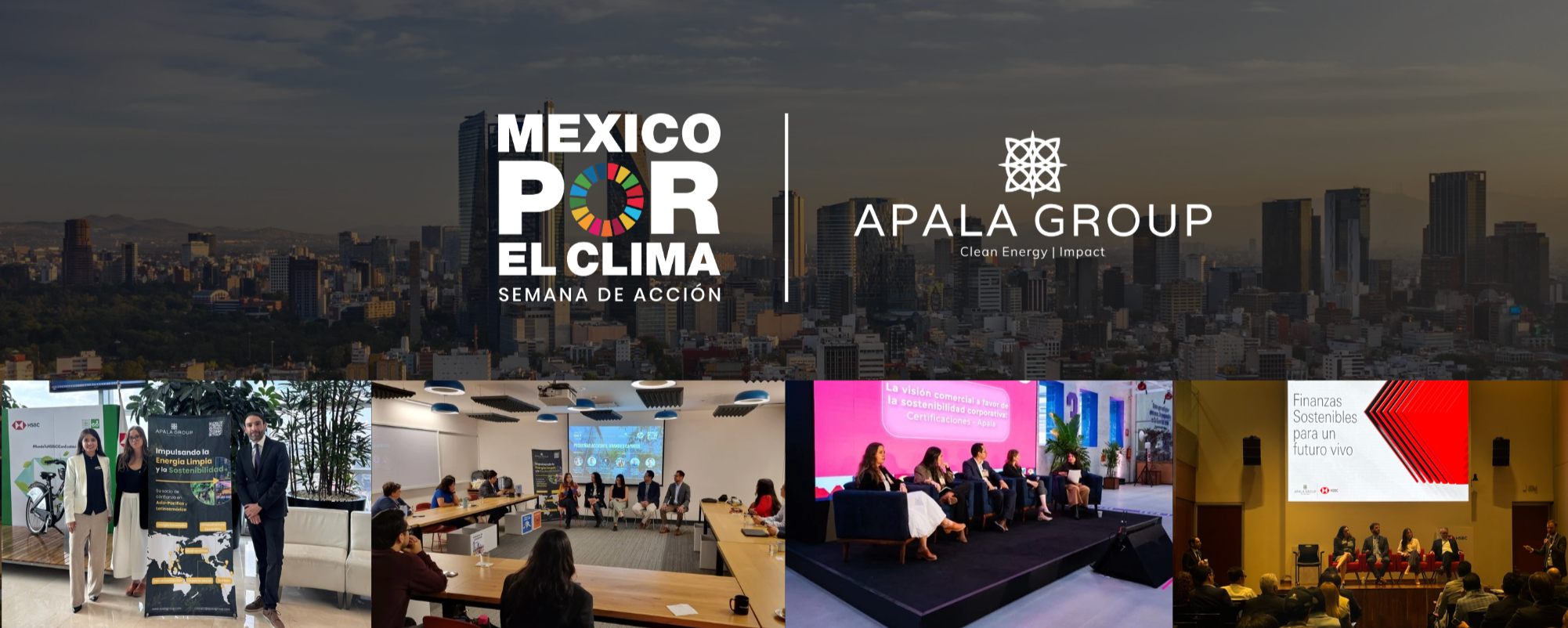
Apala Group at México por el Clima: Semana de Acción 2025
We also saw momentum in climate-resilient infrastructure and nature-based solutions. From advising on the development of resilient and sustainable hospitals, which led to studies on climate finance linked to infrastructure projects, to the launch of the Biocultural Corridor of the Maya Forest protecting 5.7 million hectares across Mexico, Guatemala, and Belize while supporting more than 2 million people, regional cooperation took tangible form.
In the Caribbean, innovation and resilience were front and center.
The region continued moving beyond traditional energy models, with developments ranging from floating offshore solar in Martinique, to geothermal exploration in Grenada, battery storage and green hydrogen in Barbados, and offshore wind procurement in Bermuda. These may look incremental from the outside, but for island states navigating high energy costs and climate vulnerability, they represent real steps toward sovereignty and resilience.
Carbon markets and climate finance also gained momentum. Countries across the Caribbean are laying the foundations for high-integrity systems through MRV collaboration, blue carbon initiatives tied to mangroves and wetlands, and early project development in places like Trinidad & Tobago. Green bonds and emerging carbon markets are increasingly shaping how island states approach adaptation and energy independence.
Alongside policy and markets, we also spent time on the ground — visiting conservation projects with ejidatarios in central Mexico and engaging directly with communities restoring forests and rehabilitating land. Those moments remain some of the most grounding of the year.
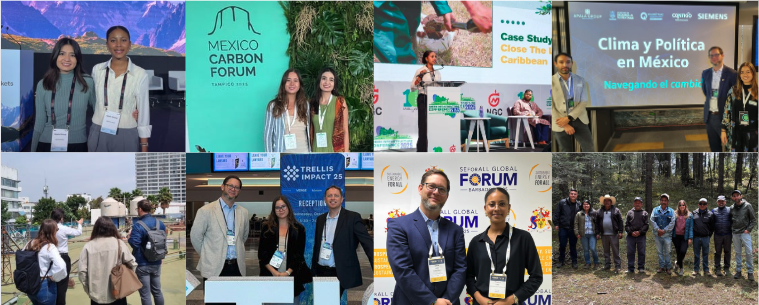
Not forgetting the addition of new members to the Apala Group team, which continues to grow, with the vision of working in a multidisciplinary way to address the needs and challenges of our projects and clients from diverse perspectives.
Taken together, these stories tell a clear story of 2025: climate action is becoming more structured, more localized, and more connected to real economies and real communities.
At Apala Group, we work at the intersection of policy and markets, finance and nature, and corporate commitments to action on the ground.
Thank you to the partners, institutions, communities, and collaborators who shaped these conversations with us throughout the year. We look forward to continuing the work in 2026.
If your organization is navigating climate strategy, energy transition, carbon markets, or nature-based solutions across APAC, Latin America, or the Caribbean, we’d love to connect.